
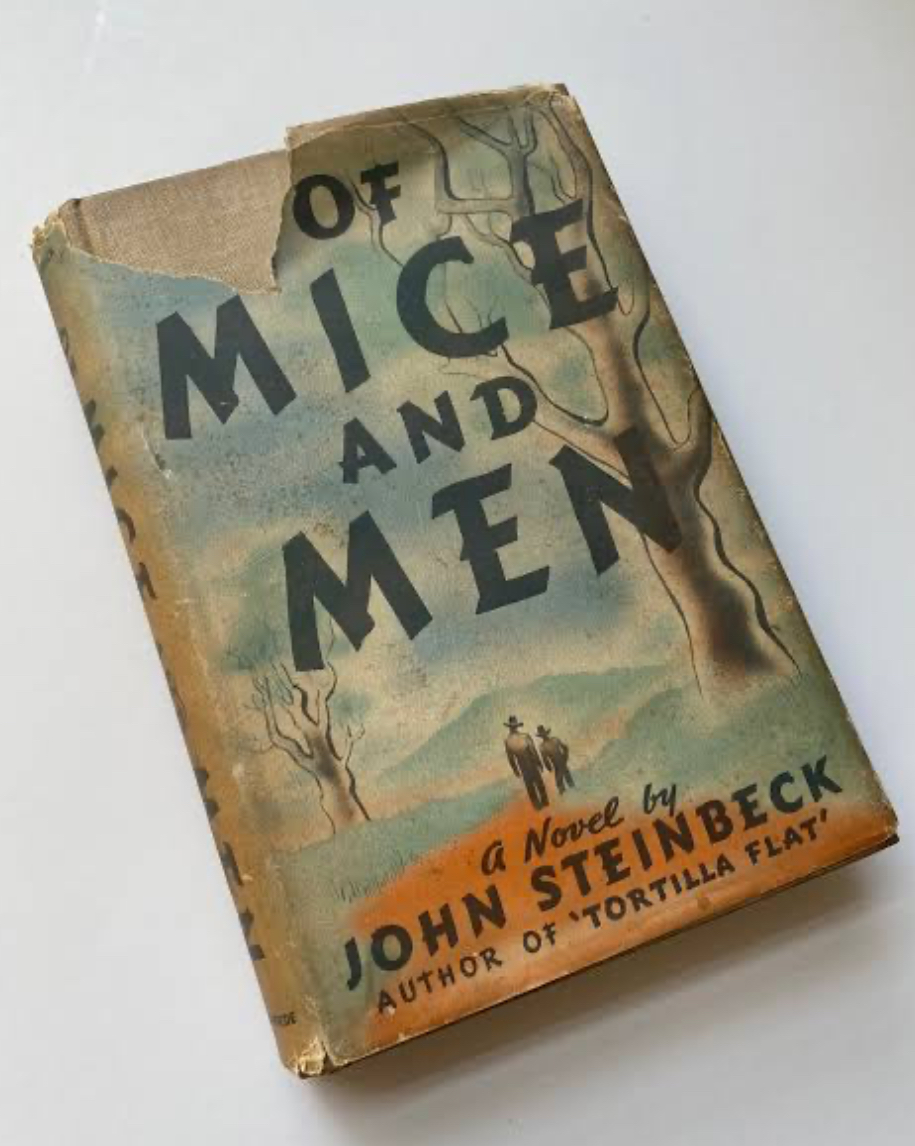
Novel by John Steinbeck – reviewed by Circe Aguiar
John Steinbeck’s Of Mice and Men is a powerful and lasting piece of American literature. Set during the Great Depression, the story captures the mix of sadness, hope, and disappointment that defined many people’s lives. With a short but meaningful story, vivid settings, and symbolic characters, Steinbeck explores how complicated human relationships can be and how easily dreams can be shattered. His use of historical detail, poetic language, and balanced storytelling makes this novel memorable and meaningful.
The novel is set in California’s Salinas Valley in the 1930s, when the country was struggling with deep economic problems. Steinbeck draws on his own experiences with migrant workers to depict a world where people are constantly moving, often lonely, and unsure of what the future holds. George and Lennie’s life on the road reflects the reality of many workers back then—people with no permanent homes, few stable relationships, and very little control over their lives.
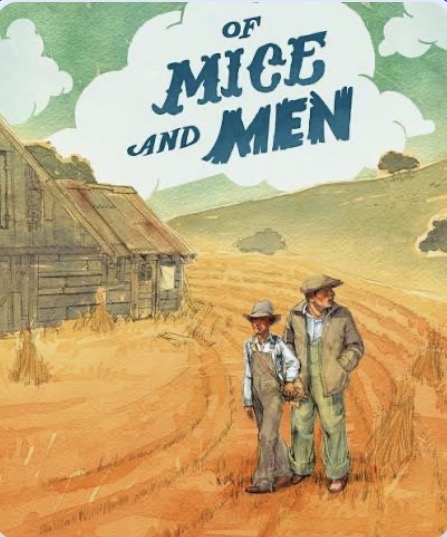
The ranch where most of the story happens represents a smaller version of America during the Depression. It’s a place where power is not shared equally. Gender, race, age, and disability all shape who has a voice and who doesn’t. The peaceful, natural world outside the ranch contrasts with the harsh, sometimes cruel world inside it, highlighting the conflict between freedom and control. Steinbeck’s writing is easy to understand but rich with meaning. He uses metaphors and animal comparisons to describe Lennie’s strength and mental challenges. For example, calling Lennie “as strong as an ox” or saying he moves “like a horse” shows both his physical power and society’s view of him as different.
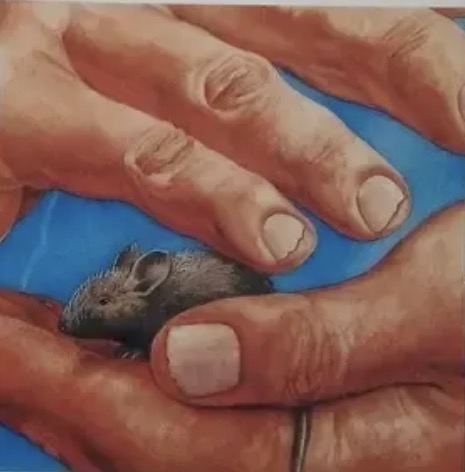
Symbols are fundamental in the novel. The dream of “living off the land” stands for freedom, dignity, and a better life. It reflects the idea of the American Dream. But this dream turns out to be just that—a dream. No matter how often George and Lennie talk about it, it stays out of reach, especially for those who are poor or don’t fit society’s expectations. Other symbols—like Lennie’s love for soft things, the rabbits he dreams about, and even repeated mentions of hands—show how close innocence and destruction can be. The same people who hold onto hope are often at risk of losing everything.
One key moment in the book is when George tells Lennie:
”Guys like us who work on farms are the loneliest guys in the world… They don’t belong anywhere. It’s not like that with us. We have a future. We have someone to talk to who cares about us.”
This quote captures the story’s heart: having someone to care about is a kind of rebellion in a world where people are often used and forgotten. Even when life is hard, an emotional connection can help people survive.
Of Mice and Men is a profoundly moving look at the human need for friendship, stability, and meaning. Steinbeck combines history, symbolism, and poetic language in a way that speaks to everyone, then and now. The novel’s short length only strengthens its emotional impact, and it remains an essential book for understanding American history and the human condition.
