Play by William Shakespeare – reviewed by Circe Aguiar
Hamlet is one of Shakespeare’s most famous and complex tragedies. It tells the story of Prince Hamlet of Denmark, who is grieving his father’s death, the king, only to find out that his uncle, Claudius, has taken the throne and married Hamlet’s mother. When the ghost of Hamlet’s father appears and reveals that he was murdered by Claudius, Hamlet’s world is turned upside down.
At its heart, Hamlet is a play about doubt, revenge, and the search for truth. Hamlet wants justice, but he also struggles with uncertainty. He thinks deeply, questions everything, and delays taking action. His famous line, “To be, or not to be: that is the question”, shows his inner struggle with life, death, and meaning.
As Hamlet tries to uncover the truth, he pretends to go mad, sets traps for Claudius, and pushes away those who love him. Along the way, many innocent people get hurt, including Ophelia, who is caught between her love for Hamlet and loyalty to her family. The play ends in a tragic chain of deaths, with nearly every main character, including Hamlet himself, dying by the final scene.
The play contains poetic language and profound questions about life, morality, and identity. Hamlet speaks in long, beautiful soliloquies (speeches to himself), showing how conflicted he is. Shakespeare’s language here is rich with imagery, like when Hamlet says:
“There is nothing good or bad, but thinking makes it so.” He says our thoughts shape the world.
Hamlet’s story still feels relevant today because it’s about someone who feels lost, angry, and unsure of what to do in a corrupt world. We watch him struggle between thought and action, love and anger, truth and lies.
Even though the play is serious and full of tragedy, it also has humor and clever wordplay, especially from characters like the gravediggers or even Hamlet, who uses wit to hide pain and confuse others.
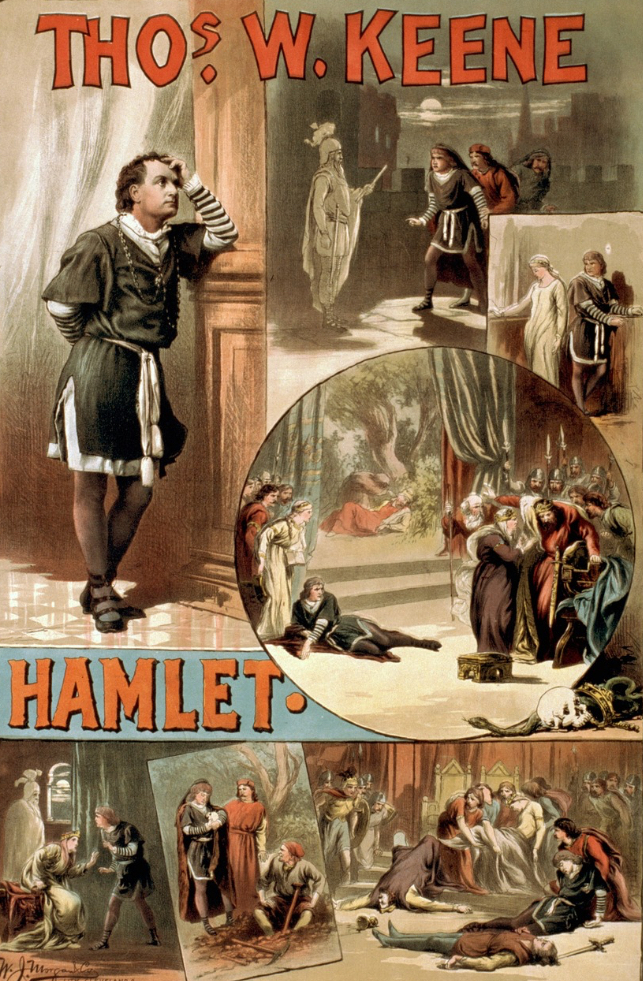
Hamlet is a rich, emotional journey through betrayal, madness, and the fight for truth. It’s not always easy to follow, but it’s worth the effort. It shows us the human mind at war with itself and the tragic cost of waiting too long to act.
