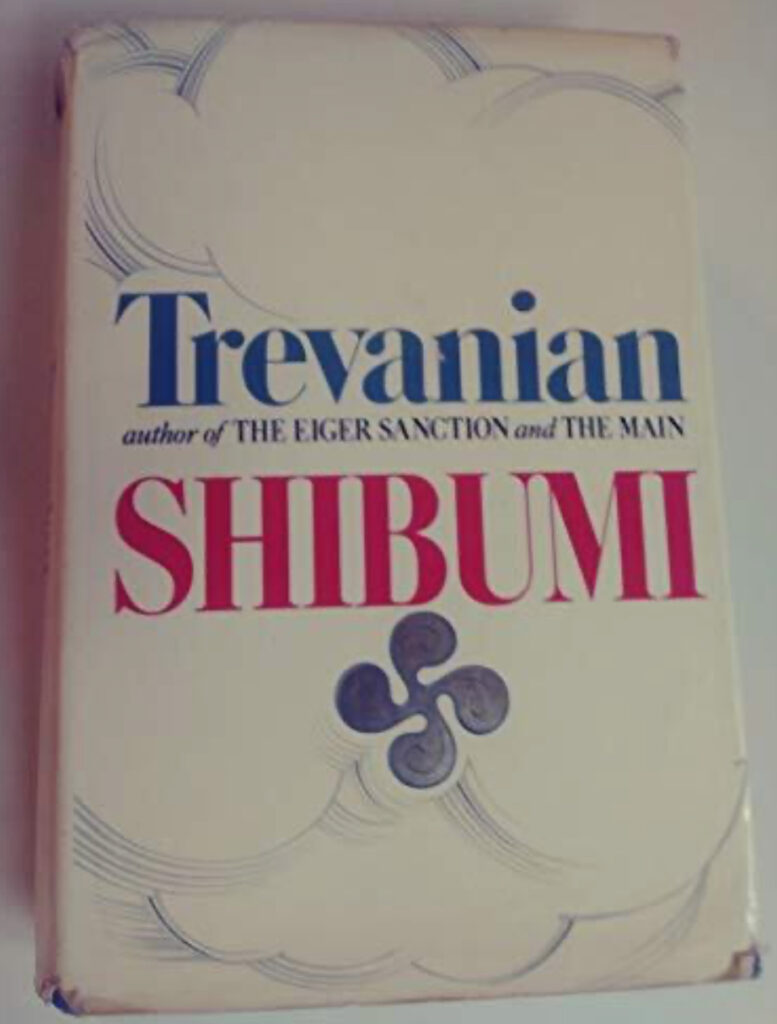
Novel written by Trevanian – reviewed by Circe Aguiar
I read books for both entertainment and learning, and some stay with me long after I turn the last page. Shibumi is one of those books. When I first read it, I knew nothing about the man behind the name Trevanian. I only later discovered that the author had chosen to remain anonymous.
The book is difficult to place in a single category. It has the pace of a spy thriller. Still, much more is going on beneath the surface: philosophy, culture, ideas about beauty, and a very particular vision of how a person might live. At its center is Nicholai Hell, a man whose lethal skills are almost matched by his intelligence and extraordinary self-discipline. What fascinated me most, though, was the world of ideas surrounding him.
Hel’s life unfolds between East and West, between shadow and light. Born in Shanghai to a Russian mother whose sensuality matched her instability, and raised amid the political violence of wartime China, Nicholai grows up in a world where nothing seems quite balanced. Only after he arrives in post-World War II Japan, a country devastated by war yet still deeply rooted in its ancient traditions, does something begin to change in him. Under the guidance of General Kishikawa and a master of Go, Hel gradually absorbs the Japanese ideals of harmony, precision, and restraint. They become part of his way of seeing the world and, ultimately, of his pursuit of shibumi, a kind of effortless perfection, quiet depth, and refined simplicity.
”Shibumi is understanding, rather than knowledge. Eloquent silence, rather than volubility. Modesty, without prudery. Elegance, without ostentation. Grace, without affectation. One does not achieve it, one discovers it. And only a few men of infinite refinement ever do that.“
Trevanian
Trevanian does not merely describe Hel’s physical training and strategic brilliance—he gives us access to its psychological architecture. During his imprisonment by American forces, Hel is psychologically tested and pushed to his limits. Yet, he hones his metaphysical strength and assassin’s craft within that darkness. The evolution is chilling, but strangely beautiful. Hel emerges not as a man shaped by history, not bound by it.
The novel moves harmoniously between deeply philosophical reflection and sharp, suspenseful action. Whether describing the subtlety of Japanese etiquette, the raw brutality of wartime survival, or the delicate art of seduction and murder, Trevanian’s prose is vivid, precise, and often interwoven with irony. His critique of American consumerism and the manipulation of power through global corporations is personified by the fictional Mother Company, which adds a razor-sharp political edge to the narrative.
But perhaps what makes Shibumi truly unforgettable is its balance: the poetic stillness of a moss garden in Kyoto against the explosive violence of underground warfare; the moments of humor and sensuality that soften Hel’s loneliness; the philosophical calm within the chaos of a world at war.
A Final Reflection
Shibumi is not a conventional spy novel, it is a meditation disguised as a thriller. It explores what it means to live with mastery, endure suffering without losing dignity, and cultivate a life of elegance in a brutal world. Trevanian’s voice is cunning and sharp, and Shibumi is his masterpiece.
For those who seek action with soul, intellect with danger, and fiction that feels both timeless and worldly, Shibumi is a revelation. It’s a novel that demands and rewards reading more than once.