
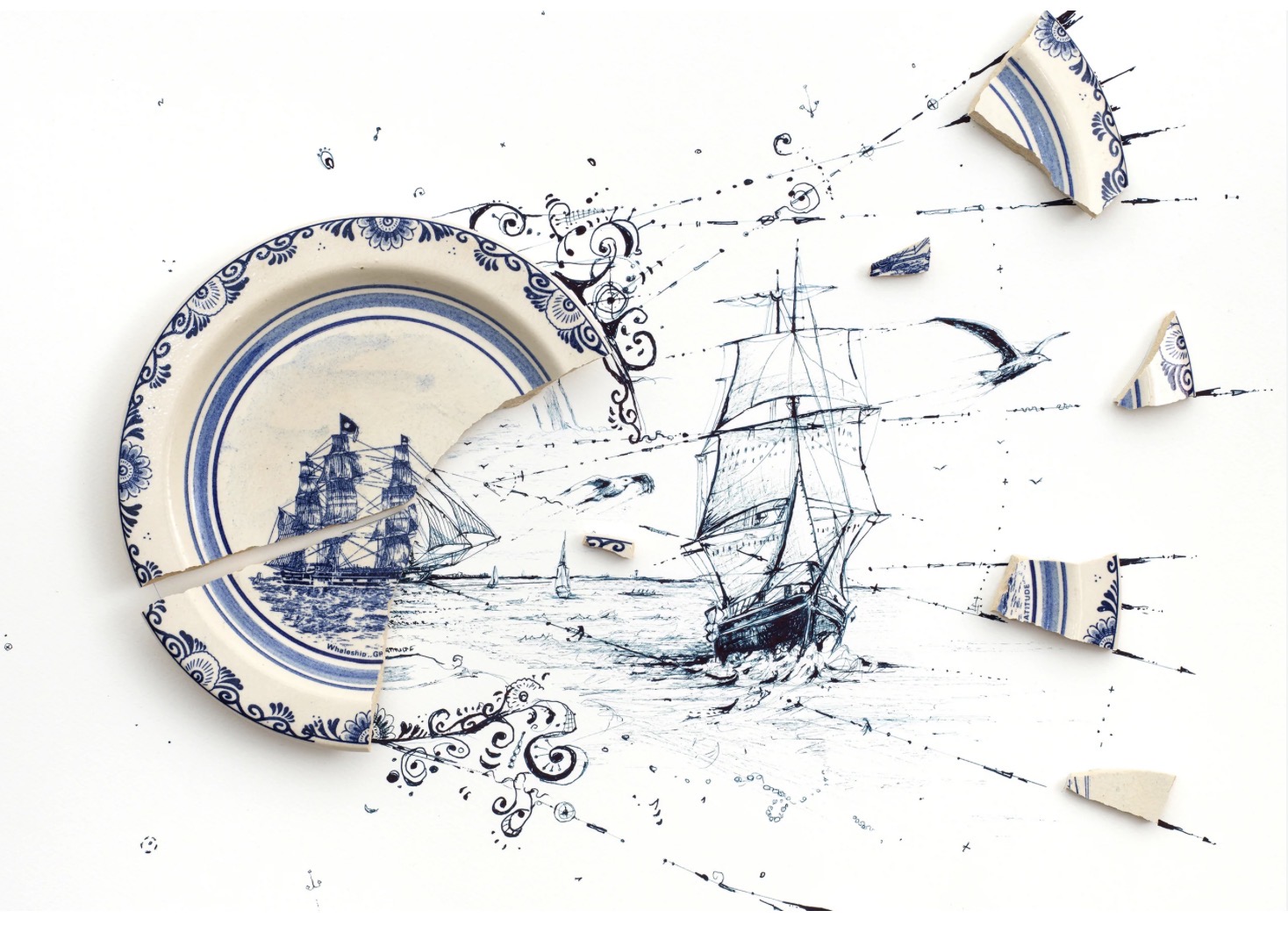
When the fragment refuses to remain a fragment
For most of us, a broken plate is the end of an object and its story.
A moment of carelessness and the porcelain shatters, losing its original purpose.
But for Robert Strati, the crack becomes a door. The shattered porcelain unfolds into forests, oceans, storms, entire worlds escaping from the wound itself. As if destruction were not the opposite of creation, but its hidden mechanism.
There is something profoundly human in this. We spend so much energy trying to appear whole, polished, perfect. Yet, the things that truly transform us usually come through rupture:
grief,
migration,
illness,
love,
time,
disillusionment,
memory.
And then someone like Strati appears and silently says:
Look closer. The rupture is where the landscape begins.
There is also something curious in the choice of porcelain. Why not a chair or a windowpane?
Porcelain is delicate, domestic, civilized; an object for dining rooms and rituals of order. Then it breaks, and suddenly, inside, there are waves, roots, creatures, movement. Nature hidden beneath refinement.
As if, beneath each carefully organized life, something wild yearned to reveal itself.
